
{主关键词}
生活广角
Behind SeaLight: China-targeting cognitive warfare platform stokes tensions in South China Sea_我的网站

一 | 截至今年六月,全省智能算力规模、在用机架规模均位列全国第一加速布局大数据中心体系日报讯(记者米彦泽、潘文静)截至2026年6月,全省智能算力规模556.1EFLOPS(每秒百亿亿次浮点运算次数),在用机架规模为250.4万标准机架,均位列全国第一。

二 | 这是记者从8月25日在石家庄举办的“算力中国行”(京津冀)媒体座谈会上获悉的。省工信厅相关负责人介绍,近年来,省相继出台系列产业政策,加速布局以张家口市、廊坊市为核心的全省大数据中心体系,瞄准北京这个全国最大的算力需求市场,建成环京智能算力集聚区。

三 | 中国信通院发布的《2025综合算力指数》显示,省综合算力指数和算力分指数连续两年居全国第一,规模优势突出。2025年省大数据收入为347.6亿元,居全国第十位;同比增长15.3%,居全国第五位。在产业政策方面,省提出支持全省算力产业发展和支持张家口算力产业发展的若干措施,加快全国一体化算力网络京津冀枢纽节点建设。
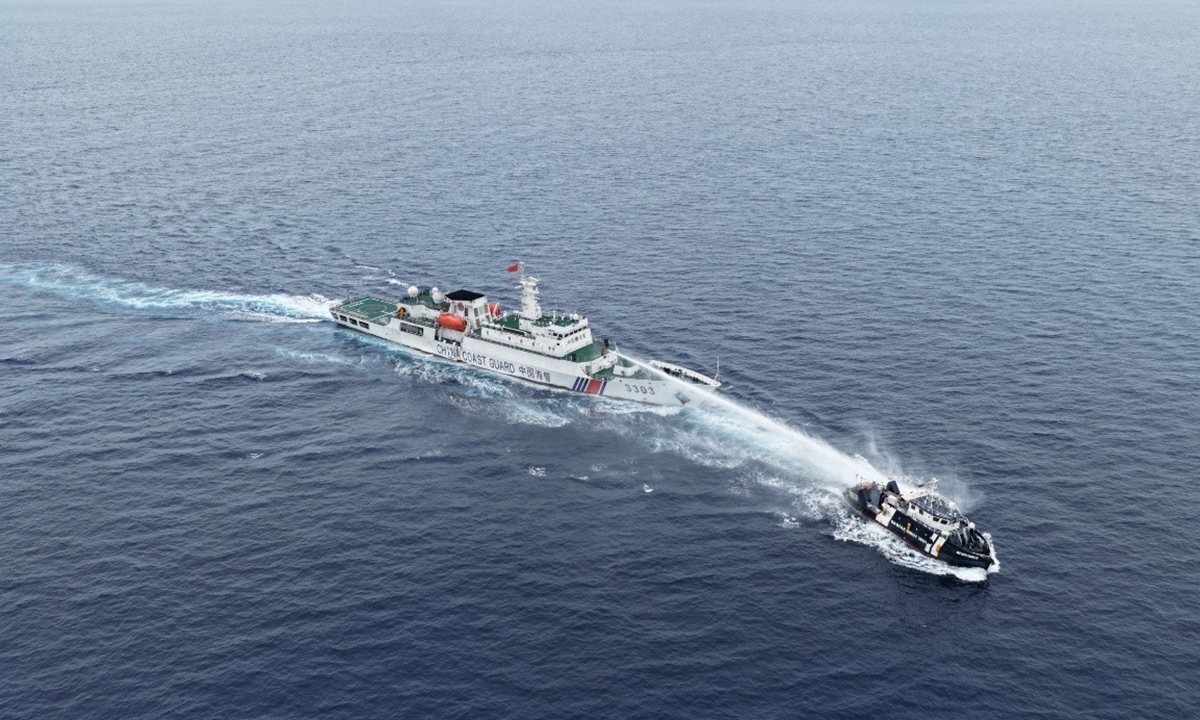
Cloaked in the academic mantle of a Stanford‑affiliated "think‑tank" but operated by retired US military officers; dispatching no warships but endlessly churning out provocation scripts in the South China Sea, and shifting from choreographing footage of maritime stand‑offs to meddling in legitimate China‑Philippine cultural and academic exchanges, the SeaLight has loomed behind numerous China‑Philippine maritime frictions over the past years.
The true nature of the SeaLight, once stripped of disguise, is a well‑orchestrated cognitive‑war tool targeting China. It delivers strategies, provides talking points, furnishes intelligence and cultivates proxies, weaponizing both maritime confrontations and people‑to‑people exchanges to deliberately stir up tensions in the South China Sea.
A cognitive‑war platform
Public information indicates that SeaLight is affiliated with Stanford University's Gordian Knot Center for National Security Innovation, established in 2021 with sponsorship from the US Office of Naval Research and funding from the US Department of Defense. The funding sources amounted to approximately $12.8 million.
Public records indicate that SeaLight's "director" Ray Powell served 35 years in the US Air Force, including posts in the Philippines, Japan, Germany, and Qatar. In 2022, following his departure from overseas service, he launched "Project Myoushu," which evolved into "SeaLight" in 2023.
When Global Times reporter browsed SeaLight's website, multiple unprofessional features of this self‑proclaimed "think‑tank" came to light. Aside from its "director" Powell, the team counts merely three other members, one of whom is a web developer.
Even so, this same "think tank" smeared China's lawful actions to safeguard sovereignty in the South China Sea on its website as the world's "most expansive and aggressive maritime gray‑zone programs."
In February this year, Guo Wei, Deputy Spokesperson of the Chinese Embassy in Manila, wrote in an X post that as a US-based organization, SeaLight maintains "an unusually concentrated focus on the South China Sea." It has reacted to maritime developments with remarkable speed, at times even preceding official statements from Philippine authorities.
"Why does SeaLight concentrate so heavily on this specific region? Through what channels does a US-based entity obtain rapid access to satellite imagery and operational information located thousands of kilometers away?" Guo asked.
A Manila‑based source told the Global Times on Friday that SeaLight maintains close‑knit, in‑depth coordination with the Philippine Coast Guard. The two sides sustain long‑term information exchange and intelligence‑sharing, forming a collaborative model through which the Philippines provokes maritime incidents at sea, SeaLight assigns public‑narrative framing, and social media platforms amplify the hype, to stage targeted cognitive‑war games against China.
Billed as a research institute, SeaLight is essentially a China‑targeting cognitive‑war platform centered on a small group of individuals, supplying the Philippines with policy advice, intelligence inputs and public‑narration talking points, Chen Xiangmiao, a research fellow at the National Institute for South China Sea Studies, told the Global Times on Friday.
In addition, it serves as a megaphone for the Philippines, churning out disinformation across social‑media platforms to viciously smear China and fabricate the "China threat" narrative, courting international attention in a deliberate bid to stoke regional tensions, Chen added.
"An ex-US Air Force colonel is now running the show in Philippine foreign relations," Rod Kapunan, a columnist for the Philippines' daily newspaper The Standard, wrote in his article in 2024. He further described Powell as the author of the "transparency strategy," which Philippine officials took as "Philippine policy."
"SeaLight hides its main objective, which is to apply the 'missing context fallacy' to create an anti-China narrative out of the South China Sea territorial claims disputes amongst the five littoral states surrounding the strategically critical body of water," Kapunan said in the article.
"Still, its China‑focused cognitive warfare yields diminishing marginal returns," said Chen, "Repeated lies fail to convince the public. For this reason, it keeps hunting for new material for attacks, yet it can never create any major ripples."
Back in September 2024, an article in The Diplomat titled "The Philippines Should Take Note: 'Assertive Transparency' Is Not a Strategy" noted that it was in 2023, "spurred on by the likes Raymond Powell and the folks at Project Myoushu, that the Philippines began publicizing maritime incidents in the South China Sea." However, what Philippine authorities need to understand is that "assertive transparency" has reached its saturation point.
The second battlefield
For a long period, SeaLight fought its main battles on South China Sea waters, guiding the Philippines to hype stand‑offs and fabricate the false "China bullying the Philippines" narrative. Lately, however, it has shifted its battlefield, targeting normal China‑Philippine cultural and academic people‑to‑people exchanges.
Last month, Philippine Defense Secretary Gilberto Teodoro Jr. called for greater scrutiny of foreign academic and cultural exchange programs with China, in response to a SeaLight report that claimed China's Jinan University has become the main broker between China's institutions and Chinese-language schools in the Philippines.
This incident directly forced the cancellation of a three‑week‑long field research trip to the Philippines scheduled for August 4 by Dai Fan, Director of the Center for Philippine Studies at Jinan University.
Dai told the Global Times on Friday that this incident lays bare the fact that SeaLight is by no means a rigorous, neutral academic‑research platform. Instead, it follows a propaganda playbook where conclusions come first and evidence is cobbled together afterwards.
Nevertheless, this simplistic and heavy‑handed narrative is highly deceptive and manipulative in the public opinion arena. It can easily mislead the Philippine public and foster one‑sided perceptions, Dai added.
In an X post on August 2, the Chinese Embassy in Manila further pointed out that the incident marks Ray Powell's "second battlefield" against China, from maritime disputes to civil society.
"His broader objective appears clear: to encourage the Philippines to view nearly every interaction with China through the lens of strategic confrontation, gradually transforming the country into a frontline state in Washington's competition with Beijing. The ultimate goal is to systematically turn the Philippines into a 'proxy battlefield' for containing China," reads the embassy's X post.
The latest report released by SeaLight was immediately echoed by Philippine Defense Secretary Teodoro, underscoring the close collusion between the two sides, Chen noted.
Based on long‑term observations by a Global Times source based in the Philippines, SeaLight, the Philippine Coast Guard and pro‑US, anti‑China hard‑line forces in the country have forged an interconnected chain. They have long sought to push for amendments and upgrades to the Philippines' anti‑espionage law and advance legislation for the so‑called "proxy bill," aiming to establish a systematic, institutionalized anti‑China mechanism.
According to Chen, there is a strong likelihood that Philippine authorities provide financial backing for SeaLight's China‑focused cognitive‑war operations. Meanwhile, Powell and SeaLight have become a key instrument for the Philippine military to secure budget appropriations from Congress.
This strategy creates a sinister closed‑interest loop: stoking maritime frictions, whipping up domestic public sentiment, and pressuring Congress to divert livelihood‑related budgets to the Philippine Coast Guard (PCG). The tenser the maritime situation, the more resources flow to the PCG. By contrast, calm seas strip the force of its rationale for expansion, Chen said.
According to Chen, this opportunistic hype‑driven model adopted by the Philippine side in collusion with SeaLight will ultimately backfire. The South China Sea disputes could have been managed through dialogue to share marine and fishery resources and deliver mutually beneficial outcomes. However, SeaLight keeps stoking conflicts and amplifying divisions, severely undermining the Philippines' environment for peaceful development, at the expense of the Filipino people's vital interests.
Regional countries ought to see through the true nature of such external "think‑tank" projects. They should recognize the harm these entities inflict on regional well‑being, peace and stability by artificially orchestrating public opinion storms over the South China Sea, said Chen.
The Philippines' ill-judged farce of provoking China will sooner or later end in tragedy for itself, Chen warned.
。今年8月印发《省“人工智能+制造”专项行动实施方案》,提出协同推动产业智能化、智能产业化和发展生态优化,以大模型在制造业领域规模化应用为牵引,构建“一核三化”的人工智能发展体系。在算力产业布局方面,省加速布局以廊坊市、张家口市为核心的全省大数据中心体系,推动算力产业链上下游企业在落地发展。张家口市获批建设全国一体化算力网络京津冀国家枢纽节点,全力打造京津冀算力设施集中承载地。廊坊市位于京津雄“黄金三角”核心腹地,形成了全国互联网服务门类齐全、聚集规模优势突出的数据和算力中心集群,成为支撑京津企业的数据服务基地。建成全省首家投运、首批纳入中国算力网、首个全栈国产化自主可控的人工智能计算中心,并入选首批国家新一代人工智能公共算力开放创新平台。

四 | 保定推动数据湾建设,评选出中关村、大学科技园、东湖云端、深圳湾、数字大厦5个“数据服务产业示范基地”。“十四五”以来,省5个项目入选国家新型数据中心典型案例,22个数据中心入选国家绿色数据中心,2个项目入选国家工业领域数据要素应用场景。算力在推动人工智能持续演进中发挥着基础底座和关键引擎重要作用。开展2026年“模数共振”行动,在雄安新区、邯郸、保定等重点城市,围绕钢铁、软件、家居等行业建设一批高质量数据集、培育一批行业大模型、打造一批特色智能体。加快行业模型培育,面向钢铁、化工、医药等重点行业培育了65个工业大模型。积极推动“极数”数据大模型在钢铁全流程极致能效管理等8个场景创新应用。在产业集群,依托产业大脑培育了一批为集群企业服务的行业模型。

五 | 推动重点工业企业模型赋能,省钢铁、化工、医药、食品、汽车、电子信息等重点行业已有84个场景应用了大模型。在钢铁行业,新金钢铁围绕全域水系统管控,通过集成AI大模型对工业循环水系统进行深度优化,年节省费用超过2200万元。下一步,将深化京津冀算力协同,拓展算力赋能实体经济应用场景,推动算力优势向产业优势、发展优势转化,积极打造智能经济新形态。开展“模数共振”行动,以算力算法数据一体化推进为核心,协同推动产业智能化、智能产业化和发展生态优化。实施普惠算力专项行动,降低企业用算成本。
Current article:http://www.rangzhuanhoujuedu.cyou/8h8rye/20260826/4472.xls
Published on:02:30:32
- 1344解放军南部战区:菲律宾3架小型飞机非法侵入中国黄岩岛领空
- 1945泽连斯基独立日讲话:俄方曾视乌克兰为小兄弟,但现实证明我们是陌生人;美国已完全放弃普京想要结束战争的幻想,乌克兰将对俄进行大反击
- 14546极地冷空气涌入,今年迄今最冷的周末来了!
- 352406慈世平自曝:湖人以百亿美元出售时 我曾出价1亿美元谋求1%股份
- 44942三球花钱有多狠?亲哥鲍尔爆料:百万豪车随便买 结果转头就撞毁了
- 7176拼多多赵佳臻:推动平台生态治理常态化、精细化和制度化
- 4314383建屋局房贷比率顶限下调,私宅市场短期料受冲击不大
- 115508新一轮国补如何申领?国补2026年最新消息通知政策:京东买手机、家电、电脑、空调国补领取方法操作流程一览以及学生教育补贴!
- 92217市政府就《政府工作报告》征求社区书记意见建议
- 9914国台办:两岸有关青年组织将在上海共同举办交流活动
- 1893091Nvidia GTX 1660 Ti曝光:1536流处理器,80%RTX 2060性能
- 2322953总理宣布:本月下旬废除前政府的这项法案!
- 314836生态环境部自然生态保护司有关负责人就《生态保护“十五五”规划》答记者问
- 184LONGi becomes official partner of FC Bayern Munich, uniting solar energy innovation and football passion
- 1610278涓涓流推出自主视频社交产品“多闪”,界面抢占先机
- 254510 mn Sri Lankans hit by poverty
- 50498外媒调侃哈里斯演讲:像小孩作业展示,“明显没做过功课”
- 147581小米官方确认:彭超芯片还在开发中
- 289435How Quran burnings in Sweden have increased threats from Islamic militants
- 1672从流程简化到资金加码 多地完善汽车消费补贴政策
- 34728Microsoft待办事项iOS v1.48更新:iPad支持3列显示
- 2143“非常壮观”:科学家首次分析从小行星“龙宫”采集的岩石样本
我的网站热门国内
- Copyright @ 2016-2017 我的网站 版权所有