
{主关键词}
天国的嫁衣
“杭州速度”背后是“一家亲”_我的网站

A | 武林夜市180个摊位雨棚布,3小时拆完、6小时复原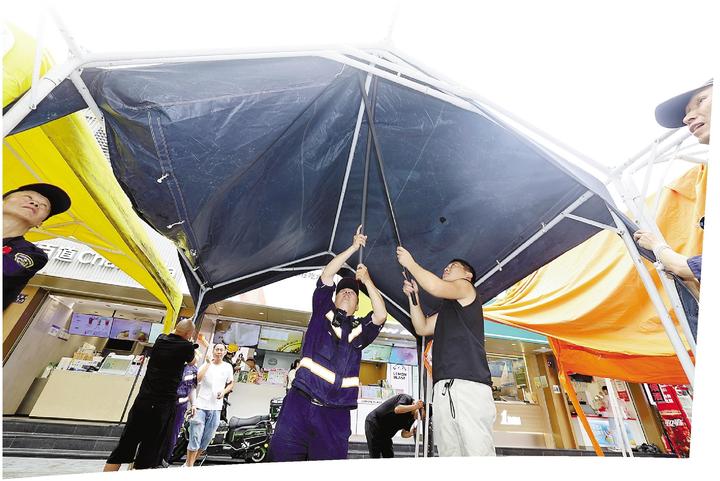
B | Pope Francis’s July 24-29 tour of Canada included a long-overdue apology to Native Canadians for the Catholic Church’s central role in abuses perpetrated at the country’s network of residential schools.,The notorious boarding school system was funded and organized by Canada’s federal government and run by Catholic and Protestant churches. It oversaw the forceful and systematic assimilation, abuse, enslavement and even murder of Native Canadian boys and girls from the mid-19th to late 20th centuries. It was a particularly brutal and cruel, but by no means first or only, tool of oppression experienced by indigenous peoples during the European colonialists’ history in North America.,“I am here because the first step of my penitential pilgrimage among you is that of again asking forgiveness, of telling you once more that I am deeply sorry. Sorry for the ways in which, regrettably, many Christians supported the colonizing mentality of the powers that oppressed the indigenous peoples. I am sorry. I ask for forgiveness, in particular, for the ways in which many members of the Church and of religious communities cooperated, not least through their indifference, in projects of cultural destruction and forced assimilation promoted by the governments of that time, which culminated in the system of residential schools,” Francis said at the former site of the Ermineskin Residential School in Maskwacis, Alberta on July 25.,The pope assured his apology was “only the first step” of “a serious investigation into the facts of what took place in the past and to assist the survivors of the residential schools to experience healing from the traumas they suffered.”,Pope Francis Holds Mass in Quebec During Visit to Canada to Apologize to Indigenous Community28 July, 13:01 GMT,Assimilation,More than 150,000 Native children passed through the residential school system over its 160+ year history. Children were prohibited, often by physical punishment, from speaking their native languages, having their ancestors’ religious concepts replaced with Christianity, and facing their cultural traditions and social norms substituted for those of the colonialists.,The first experimental residential school was opened in Brantford, Ontario, in 1833, but the system only became a federally-mandated, national, industrial-scale tool of subjugation in the 1880s after Sir John A Macdonald, Canada’s first prime minister, ordered the commissioning of a report on the residential school system model being operated in the United States.,The report, entitled ‘Industrial Schools for Indians and Half-Breeds’, became the basis for Canadian state-church cooperation in solving the Indian “problem” by removing indigenous children from the influences passed down to them by their communities and family units.,© WikipediaIndian Residential School, (Fort) Resolution, Northwest TerritoriesIndian Residential School, (Fort) Resolution, Northwest Territories© Wikipedia,Along with forced assimilation, students were subjected to other forms of torment, including sexual abuse by priests and teachers, forced labor, and slavery. As of 2021, the National Center for Truth and Reconciliation has been able to identify 4,117 documented deaths of First Nations, Inuit and Metis children in residential schools. However, new graves continue to be discovered, and former Truth and Reconciliation Commissioner Murray Sinclair estimates that more than 6,000 children may have died in the residential school system over the period of its operation.,In his bombshell 2016 book “Murder by Decree: the Crime of Genocide in Canada,” writer and former United Church of Canada reverend Kevin Annett challenged the NCTR over its conservative estimates on the residential school deaths, detailing the commission’s suppression of eyewitness testimony and archival documentation, and estimating that the true death toll may have run in the tens of thousands. Annett documented how the system included a monthly “death quota” and involved the use of germ warfare, and believes that as many as 50,000 children may have perished in the residential school network.,Exploitation,Residential schools were by no means the first instance of settlers’ mistreatment of Canada’s indigenous population, with Britain’s victory against the French in the North American theater of the Seven Years’ War of 1754-1763 sealing their fate of subjugation and colonial land grabs, as well as the relentless and cynical exploitation of the most loyal tribes.,At the conclusion of the war in 1763, King George III issued a royal proclamation declaring all lands west of the Appalachian Mountains and the colonies of what would ultimately become the early United States as Native territories, outlawing their settlement or purchase by colonialists, and requiring treaty negotiations for any changes to the arrangement. In Canada –organized from the remnants of New France under the name ‘Quebec’, lands to the west and north of the colony were proclaimed Indian territory.,Centuries later, scholars continue to fiercely debate the correct interpretation of the proclamation, and whether it was meant as a permanent guarantee of Native rights to lands beyond the then-existent colonies, or a mere opportunity for colonists to catch their breath before continuing an aggressive push west.,© Photo"The British Governments in Nth America Laid down agreeable to the Proclamation of Octr. 7, 1763," Gentleman’s Magazine (London, 1763)"The British Governments in Nth America Laid down agreeable to the Proclamation of Octr. 7, 1763," Gentleman’s Magazine (London, 1763)© Photo,Even as colonists repeatedly broke the 1763 treaty’s terms throughout the rest of the 18th and 19th centuries through wars of aggression and by taking advantage of divisions within Native tribes through cunning and trickery, many Natives remained loyal to the Crown.,Perhaps nowhere was this better exemplified than in the story of Joseph Brant, an 18th-century Mohawk military and political leader who led his warriors in defense of the British Empire during the American Revolutionary War of 1775-1783, and whose efforts proved decisive in halting an American advance into what is now Canada.,In return for the loyalty shown by Brant and his fellow Mohawks, Quebec Governor Sir Frederick Haldimand promised that after the war, his people would be granted more than 8,090 square km of land around the Grand River Basin in southern Ontario. However, after the war ended in 1783, the settlers would gradually chip away at their commitments, with the Native-administered area now known as the Six Nations Reserve shrinking to just 183 square km of land, two percent of what Brant was originally promised.,Brant’s story was repeated in one form or another throughout the 19th century, and today just 0.36 percent of Canada’s total landmass has reserve status for its Native communities.,© Wikipedia / National Archives of CanadaJoseph Brant, watercolour by William ArmstrongJoseph Brant, watercolour by William Armstrong© Wikipedia / National Archives of Canada,Discrimination,Notwithstanding decades of recognition by successive governments of the historical injustices done to indigenous people, and lip service to improving their social and economic standing, Canada’s community of 1.67 million Natives continues to struggle with a broad spectrum of problems more typically characterizing countries of the so-called Third World than of a thriving, highly developed First World nation.,The Council of Canadians estimates that some 73 percent of First Nations’ water systems are at medium or high risk of contamination, with dozens of indigenous communities still lacking basic access to clean drinking water, despite billions of dollars in aid doled out by Ottawa every year to developing countries, and over a billion dollars in support sent to Kiev this year amid the Ukrainian security crisis.,Along almost every social indicator, from poverty and access to housing to crime, education, and healthcare, Native communities continue to rank below other Canadians. Nowhere is this exemplified better than in average life expectancy. While other Canadian men and women live on average to an age of 79 and 84 years, respectively, among the First Nations, Metis and Inuit, these figures drop to 72.5 for men and 77.7 for women.。

C | 记者 许卓恒 摄" />安装雨棚布。记者 许卓恒 摄杭州日报讯 “使劲,右边再往下拉。”“上面再用棍子顶一下。”昨天上午,天空还飘着细雨,武林夜市管理员、商户和拱墅区综合行政执法局武林中队队员、拱墅城运集团武林路“红旗班”队员等40余人正忙着安装武林夜市180个摊位的雨棚布。下午3点,经过6个小时的连续奋战,雨棚布全部安装完毕。

D | 傍晚,武林夜市如期复市。8月8日,本报“发现都市圈”视频号上发布的《杭州速度!迎战台风“白海豚”,武林夜市3小时拆完所有帐篷》视频,浏览量近60万。有网友点赞:这体现了防汛抗台期间的“杭州速度”。昨天上午,记者再次来到武林夜市,探寻“杭州速度”背后的深层答案。速度源于温情记者在现场看到,安装夜市雨棚布并非易事——一个摊位的雨棚布需要四五个人同时操作才能安装妥帖,要先把布盖到雨棚钢架上,再拉扯4个角,中间要有人拿根棍子顶起棚布,还要系上20多个锁扣。

E | 他们从早上9点就开始忙碌了。

F | “雨棚布安装的工作量要比拆的时候多好几倍,而且每拆一次雨棚布都会有损耗。”武林夜市现场管理员胡建华说,“台风来袭,夜市雨棚不拆掉是相当危险的。

G | 但这次迎战台风‘白海豚’,我们经过研判后,决定仅拆掉雨棚布,上次迎战台风‘巴威’我们连棚架都拆了。”拱墅城运集团武林路“红旗班”派出了近10人前来帮助安装雨棚布。“我们在武林路和龙游路上做清洁工作,平时与夜市的商户、管理员相处得很和谐。拆装夜市雨棚是为了防汛抗台,保一方平安,我们责无旁贷,每次都是积极参与和协助的。”该“红旗班”班长盛正河说,“武林夜市的商户们一直很关心我们,寒冬腊月送温暖、三伏夏日送清凉,我们就像一家人。家人的事,就是我们自己的事。”来自山东的非遗篆刻摊主王鹏一早便赶来搭把手,“我们有句口号是‘武林夜市一家亲’。雨棚布早点装好,我们可以早点复市做生意,帮帮忙是应该的。”事实上,“武林夜市一家亲”是武林夜市自2013年开市起便长期践行的共治理念。2021年2月,武林夜市党支部正式成立,成为杭州夜市业态的首个党支部,由从夜市商户一步步成长起来的管理人员叶连忠担任首任党支部书记。“商户不再只是独立经营的生意人,更是街区治理的参与者。平时大家互相照应、维护夜市经营秩序,遇到台风等险情,他们主动放下生意,配合隐患排查、参与应急工作。”叶连忠说,“武林夜市每年都会举行‘一家亲’年会,商户有困难市场也会及时相助、减免租金,市场里还专设公益摊位,照顾残疾人、大学生创业等。”温情滋养烟火武林路鸿鼎商务楼3楼的一个窗户前,一个简单的三脚架上装着一台连着充电宝的手机,正在拍摄楼下武林夜市装雨棚布的延时视频。

H | 屡次防汛抗台,武林夜市爆红的拆装夜市雨棚视频,正是在这里拍摄的。在楼上办公的叶连忠下楼来看看拍摄是否顺利,这时他的手机又响了。

I | “我正在和某知名酒企谈一个商务合作,过几天他们要来夜市办一个快闪活动,还有好几个活动等着去谈,还有一些夜市想请我们去聊聊合作。”叶连忠已经习惯了这样的忙碌。从2013年的40个摊位,到如今的400个摊位,节假日日均人流量达10万人次,作为杭州夜经济标杆,武林夜市正凭借品牌效应、管理模式,打造多元化经营体系——创新“武林故事”核心IP、开发文创伴手礼、孵化网红摊主,以及落地江苏镇江开办合作夜市,进驻“浙BA”赛场,举办“运閤集”等各类主题消费活动。人来了,生意就来了。武林夜市的烟火气,激活了片区商业链。夜市周边的商业、酒店、办公楼的租赁和生意都被带动起来。“龙游路、武林路南段,夜市周边的商铺很少有空的,租金也相对稳定。

J | ”叶连忠说。

K | 武林街道经济数据显示,今年上半年,武林街道实现社会消费品零售总额同比增长6%,餐饮业营业额同比增长8.3%。武林路的市井烟火,正持续释放着强劲的经济韧性。
Current article:http://www.rangzhuanhoujuedu.cyou/b0n/7lo.html
Published on:06:02:32
- 224海南省自然资源和规划厅:构建“人防+技防”耕地监测预警体系
- 908在华为“感恩节反馈季”的背后,温度保持不变。
- 2806769Bihar Flood ALERT: प्रयागराज से भागलपुर तक राइजिंग मोड में गंगा... नवगछिया और कहलगांव में उफनाई, बढ़ा बाढ़ का खतरा
- 9075袅袅草药香 悠悠润童心——猎德幼儿园大班亲子走进省博开展中草药探秘之旅
- 629128三星电子、SK海力士计划下半年增加对英伟达8层HBM4内存供应量
- 310004再用封号!《魔兽世界》紧急公告插件违法,悬赏10万征集新插件
- 524953奋进强国路 阔步新征程丨432公顷土地“生态修复” 百年矿坑“绿色蝶变”
- 918907新西兰女尸悬案,身上一器官曾切除过!30至50岁之间…
- 5242凯因科技:首次回购3万股
- 586406最新民调:仅31%美国人支持对伊朗采取军事行动,33%受访者支持特朗普,创历史新低
- 8610金州大阵,过分感人
- 5542泄露的2亿份中文简历的来源证实了原项目已被删除。
- 514华西证券:聘任杨炯洋任首席战略官、副总经理
- 182966深圳大学诺德幼儿园寒假放假通知
- 101952名中国女游客在日本身亡,细节披露!当地人:感觉早晚要出事
- 7677超670亿元,资金持续加仓
- 7204113创新协同共享 合奏振兴强音
- 9180区委常委会第一百六十六次会议召开
- 348884单色液晶屏JX12232K,COB液晶显示模块,12232液晶屏_com_http
- 752Hurricane Fiona causes $660 mn damage in Atlantic Canada
- 80935商务部:跨国公司对华投资呈现“三个转变”
- 16685河北最新发布:暴雨蓝色预警
我的网站热门国内
- Copyright @ 2016-2017 我的网站 版权所有