神探伽利略
蚂蚁集团组织了一支「物理AI特工队」:蚂蚁灵波具身路线的优势与困顿_我的网站

A | 该图片使用了AI生成技术
本文来自微信公众号: 潮涌AI ,作者:潮涌AI编辑部,原文标题:《蚂蚁集团组织了一支「物理AI特工队」:蚂蚁灵波具身路线的优势与困顿》
2024年12月,上海张江,一家新公司注册成立。
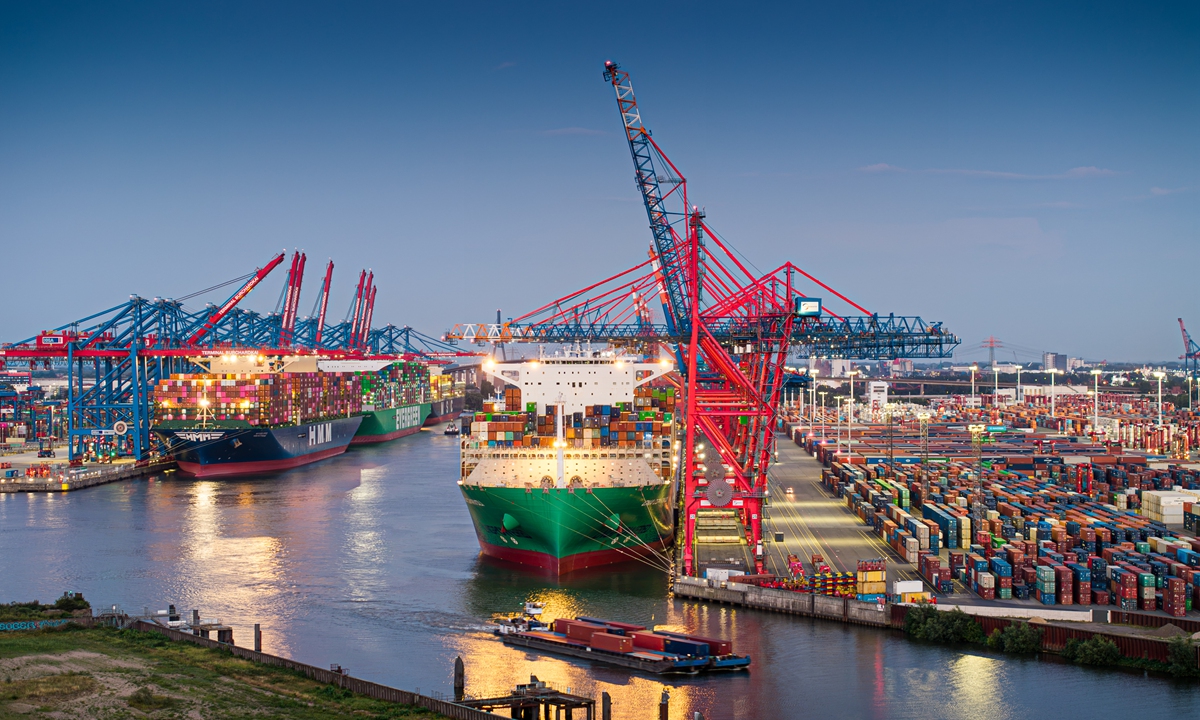
Container ships, gantry cranes and container yards are seen at the HHLA Container Terminal Burchardkai and the EUROGATE Container Terminal in Hamburg, Germany, on August 5, 2026. Photo: VCG
German exports to China fell year-on-year in the first half of 2026, pointing to a deeper restructuring of bilateral trade as China moves up the manufacturing value chain, Chinese analysts said. They also cautioned that the decline should not be read as diminishing China's importance to German businesses, given the deep economic ties and the continued benefits of cooperation for both sides.
Germany's first-half exports to China fell by more than 12 percent year-on-year to just under 37 billion euros ($43 billion), while imports from China rose 8.9 percent to 91.8 billion euros, according to data from Germany Trade & Invest (GTAI) cited by Reuters on Sunday. Germany's trade deficit with China widened to about 55 billion euros from 40 billion euros a year earlier, the report said.
Reuters cited Corinne Abele, GTAI's East Asia expert, as pointing to weaker domestic demand and the fact that German companies are increasingly producing inside China.
Commerzbank economist Vincent Stamer said that China's diminishing reliance on Germany showed that the country is becoming more independent of Western powers and catching up technologically, according to Reuters.
China has continued to strengthen its capabilities in sectors including new-energy vehicles, artificial intelligence and advanced manufacturing, enabling more products and technologies that previously depended on imports to be supplied domestically, Zhao Junjie, a senior research fellow at the Institute of European Studies at the Chinese Academy of Social Sciences, told the Global Times on Sunday.
"This means the structure of China-Germany trade is changing," Zhao said, noting that as Chinese industries move up the value chain, China's reliance on some German industrial products is declining, while Chinese companies are becoming more competitive in sectors where German manufacturers traditionally enjoyed strong advantages.
In a position paper released on July 28, China's Ministry of Commerce (MOFCOM) said that the rapid growth of China's modern industries is driven by innovation, with nationwide research and development (R&D) spending growing by an average of 10 percent annually during the 14th Five-Year Plan (2021-25) period.
The changing trade trend is also linked to Germany's own industrial competitiveness and policy environment, Zhao said, noting that high energy costs, demographic pressures and slower investment in some emerging technologies have weighed on the country's industrial upgrading and innovation.
At the same time, political and security considerations have increasingly shaped Germany's economic policy toward China, as Berlin has moved closer to the broader US and EU "de-risking" agenda, Zhao said.
"Such policies can be a double-edged sword, raising costs for German companies in China and disrupting bilateral economic cooperation while seeking to pressure Chinese industries."
However, it is notable that overall China-Germany trade remained substantial. Total bilateral trade exceeded 128 billion euros in the first half, about 3 billion euros more than Germany's trade with the US, according to Reuters.
China overtook the US as Germany's top trading partner in 2025 after US President Donald Trump launched sweeping protectionist tariffs that weighed on German exports to the US.
Falling German exports should not be seen as diminishing China's importance to German businesses, especially as bilateral ties are increasingly expanding beyond trade into investment, local production and R&D, analysts said.
German companies invested more than 7 billion euros in China in the first 11 months of 2025, up 55.5 percent from 4.5 billion euros in 2024 and 2023 and hitting a four-year high. German companies are bulking up their China business and adopting "China for China" production strategies partly to reduce exposure to possible tariffs and export restrictions, according to Reuters.
Major German companies are also deepening their presence in China. BASF's Verbund site in Zhanjiang, South China's Guangdong Province went fully operational in March with an investment of 8.7 billion euros, the largest single investment project wholly owned by a German enterprise in China, the Xinhua News Agency reported.
"China and Germany have developed deeply intertwined economic interests over many years," Zhao said. Rather than treating stronger Chinese industries as a reason to reduce cooperation, Germany should adapt to a relationship in which competition increasingly coexists with investment, innovation and industrial collaboration, he noted.
Recent high-level exchanges have also underscored the importance both sides attach to economic ties. During a meeting with German Economy Minister Katherina Reiche in May, Chinese Vice Premier He Lifeng said that China and Germany are important economic and trade partners with a solid foundation, enormous potential and strong complementarity, calling on both sides to consolidate cooperation in traditional sectors and tap opportunities in emerging fields, according to the Xinhua News Agency.
Reiche said that the German business community remained confident about China's economic prospects and innovation capabilities and would continue to deepen cooperation, Xinhua reported.
The two sides have also moved to strengthen institutional mechanisms. China and Germany agreed to restart the China-Germany Joint Economic Committee and establish two new working groups on trade and investment and industrial cooperation, according to the MOFCOM.
。

B |
硕博占比超过九成,CEO是朱兴,首席科学家沈宇军来自蚂蚁技术研究院交互智能实验室。
这家公司叫蚂蚁灵波,蚂蚁集团全资子公司,注册资本1亿元,在刚刚结束的WAIC上以“镇馆之宝”的名号扩散势能。

C |
毫无疑问,蚂蚁集团内部多了一支被员工称为“物理AI特工队”的队伍。他们的任务不是做支付,不是做大模型聊天机器人,而是给实体机器人造“大脑”。
蚂蚁如何爬出一家“机器人公司”
朱兴2011年加入阿里巴巴。

D |
过去14年里,他做过支付、金融服务、O2O,2023年刚刚完成支付宝广告商业化的从0到1,而在2024年底,他被抽调筹建蚂蚁灵波。
这是一个令外界意外的选择。

E |
从时间线来看,灵波的筹建时间非常紧迫。
朱兴没有机器人行业的背景,但他有一个蚂蚁当下最需要的能力:把技术变成能落地的产品。
灵波的首席科学家沈宇军则来自蚂蚁技术研究院交互智能实验室,研究方向是计算机视觉和深度学习,本科毕业于清华大学电子工程系,然后选择在香港中文大学信息工程系攻读博士学位,曾在商汤实习,担任过字节跳动高级研究员。
两人搭配的逻辑清晰:一个懂产品化和商业化,一个懂技术底层。

F |
目前,灵波团队硕博技术人才占比超过九成。在蚂蚁集团内部,灵波挂在CTO线下,与百灵大模型团队、支付宝AI团队平行,但专攻“物理智能”——也就是具身智能。
蚂蚁集团对灵波的战略定位,是把AGI目标拆成两个层面:数字智能和物理智能。数字智能由百灵大模型、AI支付宝、蚂蚁阿福等业务承载;物理智能的核心执行主体,就是灵波。
六款模型,两条路线
2026年7月初,蚂蚁灵波在一周内连续发布六款具身智能大模型,覆盖视觉、视频、空间感知、灵巧操作、世界模型和世界动作模型六个方向,并且全部开源。
这不是一次普通的产品发布,灵波在发布会上展示了它的技术路线选择:双线并进。
第一条是VLA路线(视觉-语言-动作),代表模型是LingBot-VLA 2.0。

G | 这条路线的主流逻辑是“看到→理解→动作”,基于视觉-语言模型做基座,让机器人根据视觉输入和语言指令输出动作。这是当前行业最主流的技术路线,Figure、Google DeepMind的RT系列都在这个方向。
第二条是世界模型路线,代表模型是LingBot-VA 2.0。这条路线不直接映射感知到动作,而是先预测“世界接下来会如何变化”,再同步生成下一步动作。沈宇军在技术分享中把VA 2.0定义为“行业首个具身原生世界动作模型”,基于自回归架构从零开始预训练,实现了单卡150Hz的实时推理。

H |
六款模型的分工是清晰的:
VA 2.0的技术细节值得单独拆解。

I |
据灵波发布的技术文档,它采用了四项核心设计:语义视觉-动作分词器、严格的因果预训练范式、MoE架构,以及增强的异步推理机制。前三项解决的是“理解世界”的问题,最后一项解决的是“实时响应”的问题,让机器人在执行当前动作时,模型已经开始预测未来状态。
150Hz的推理频率是什么概念?
它意味着模型每秒完成150次推理,单次响应约6.7毫秒;作为参照,人类眨眼一次约需300-400毫秒,也就是说,机器人“思考”一次的时间不到眨眼时间的1/50。
灵波的技术文档称,VA 2.0让机器人具备了“边推演、边行动”的通用控制能力。
但一位机器人行业从业者向亿邦动力表示,推理频率只是工程指标之一,真正的考验是在真实场景中的泛化能力。“在仿真环境里跑150Hz和在有老人、小孩、宠物的家庭环境里跑150Hz,是两回事。”
开源、R1和生态
灵波这次发布的另一个关键策略是全栈开源——权重、代码、后训练工具链、评测集全部放出。
在技术标准尚未定型的阶段,开源是建立生态影响力的最快方式。灵波的模型支持多种机器人构型,不同本体和场景均可接入同一套“大脑”。
目前,已有十几家机器人厂商与灵波建立合作。

J |
除了蚂蚁直接参与投资的宇树科技、星海图,今年6月,乐聚机器人官宣旗下KUAVO 4 Pro(夸父)已完成LingBot-VLA的后训练适配,并围绕GM-100评测体系里的95个真实操作场景做了系统性测评。
LingBot‑VLA 2.0训练
但灵波并非只做“大脑”。
2025年9月,它推出了首款服务机器人Robbyant R1,定位家庭、养老、医疗健康等服务场景。不过,根据多家媒体的报道,R1目前的出货量有限,更接近“验证模型的载体”,距离大规模走量尚有距离。
这是一个现实的处境。
在硬件本体环节,宇树、智元、银河通用、星动纪元等公司在硬件工程、供应链和量产上已经积累了数年,灵波的机器人产品力和量产能力还无法与它们直接竞争。

K |
大厂具身地图上的“唯一”
把灵波放在中国大厂具身智能的地图上,它的位置有些特殊。
阿里在通义体系下推出了Qwen-Robot,但产品定位更偏平台工具,给机器人厂商提供多模态基础模型,本身不做本体,也不深入到具身大脑的操作层;腾讯的Robotics X研究院走“云+投资”路线,把大脑和算力卖给机器人公司;华为CloudRobo同样以云端能力为主。京东和美团采取重投资、轻自研的策略,聚焦物流和配送场景。
灵波是唯一一家同时押注大脑基座、世界模型和本体落地的大厂子公司。
蚂蚁灵波官网截图
但这个“唯一”也带来了问题。
灵波在蚂蚁集团内部需要与百灵大模型团队、支付宝AI团队争夺资源;在蚂蚁集团外部,仅阿里系内部就有多个具身智能条线“各自为战”,包括千问Qwen-Robot、高德世界模型,尚未形成统一的战略协同。
数据困局与开源的悖论
如果技术路线的不确定性是第一层困顿,那么数据瓶颈是更现实的第二层。
具身智能行业有一个被反复提及的残酷数字:真实世界数据与语言数据有几万到几百万倍的差距。大语言模型可以调用万亿级的人类语言数据进行训练,但机器人需要的物理交互数据,比如“怎么抓杯子不碎”“在湿滑地面上怎么保持平衡”,只能靠真机一点点积累。
灵波的数据从哪里来?
根据AIX财经报道,灵波的真机数据主要依赖生态伙伴供给,包括宇树、乐聚、星海图等合作厂商的真机测试数据。
这是一种“借鸡生蛋”的模式:灵波自己不造大量本体,靠合作伙伴的数据来训练模型。
但这个模式的脆弱性是显而易见的。

L |
宇树科技刚刚推出了宇树UnifoLM-OminiA-0.3具身大模型,智元机器人有自己的世界模型和AgiBot World数据平台。一旦这些本体厂商认真自研大脑,数据供给随时可能收紧,灵波将失去最重要的训练燃料。
微博截图
全栈开源是灵波应对这个困局的策略:权重、代码、工具链、评测集全部放出,吸引全球开发者基于其标准开发,试图把自己变成“公共底座”。
但是,别忘记了具身智能头部玩家们自己也都在有意识布局“大脑”,如果它们自己的大脑做得比灵波更好,为啥选择灵波?
开源在标准未定型的阶段是建立生态的最快方式,但它本身不构成护城河。

M | 模型能力能否持续领先,才是灵波能不能守住“公共底座”位置的关键。

N |
为什么要做这件事?
蚂蚁做具身智能,最直接的背景是战略重心发生了变化。
“具身智能”在2025年首次被写入政府工作报告,随后,上海、深圳等地相继出台支持政策。但政策红利之外,蚂蚁有一个更具体的业务逻辑。

o |
蚂蚁的主业,支付、金融、健康,增长已见顶。但很多人忽略了一点:蚂蚁从来就不是一家纯线上的公司。
支付宝的二维码遍布全国数千万商户,蚂蚁的医疗业务(好大夫在线、阿福)直接连接医院和患者,芝麻信用渗透进租房、出行、政务等线下场景。
蚂蚁的触角早已延伸到线下,只是过去用软件和二维码作为入口。

p |
在老龄化社会里,AI助手不仅要解决问诊这一个问题,最终还要有实体:陪伴、送药、康复、看护,纯软件解不了这些问题。

q |
沈宇军在今年7月的一次技术分享中表示,“未来要更好地服务用户,肯定会进入到物理世界,这是业务的自然延伸。”
从这个角度看,灵波对蚂蚁而言,不是一次跨界冒险,而是主业的自然延伸。
对一家科技公司来说,做具身智能、做物理AI,是进入线下最深场景最合理的路径之一。蚂蚁必须走这一步,因为线下的刚需场景终究需要实体来承接。
但这条路的长度可能超出预期。

r |
高盛团队在研报中认为,人形机器人技术拐点仍不明朗,能力尚不足以处理多种通用任务。高盛预计,到2027年全球人形机器人出货量约7.6万台,到2032年约50.2万台,步伐慢于市场预期。

s |
灵波的200余人团队正在和时间赛跑。他们在一周内开源了六款模型,但把模型变成能在老人家里安全运行的机器人,还需要更长的周期。
CEO朱兴在公司成立之初说过一句话:“让人形机器人早日走进寻常百姓家。

t | ”
这句话的实现时间,目前还没有人能给出一个确切的数字。
*参考文章:
AIX财经《蚂蚁,为何狂卷具身智能?》
亿邦动力《一周开源六款模型蚂蚁灵波卡位“具身原生”》
科创板日报《WAIC观察:具身智能“深圳军团”,补齐人形机器人落地关键中间层》
本内容由作者授权发布,观点仅代表作者本人,不代表虎嗅立场。如对本稿件有异议或投诉,请联系 [email protected]。
Current article:http://www.rangzhuanhoujuedu.cyou/list_vu6wb/x29y.ppt
Published on:09:55:30


